會員登入
|
加入會員
|
會員專區
|
購物車
|
自資出版
|
電子書城
|
客服中心
文學小說
商管創投
人文藝坊
勵志養生
進修學習
科學工程
家庭親子
玩樂天地
書名
出版社
作者
isbn
編號
英語會話
|
成交的秘密
|
霹靂影音寫真特典
|
微處理機/單晶片組合語言教學範本(附CD)
此作者無相關書籍
文學小說
文學
|
小說
商管創投
財經投資
|
行銷企管
人文藝坊
宗教、哲學
社會、人文、史地
藝術、美學
|
電影戲劇
勵志養生
醫療、保健
料理、生活百科
教育、心理、勵志
進修學習
電腦與網路
|
語言工具
雜誌、期刊
|
軍政、法律
參考、考試、教科用書
科學工程
科學、自然
|
工業、工程
家庭親子
家庭、親子、人際
青少年、童書
玩樂天地
旅遊、地圖
|
休閒娛樂
漫畫、插圖
|
限制級
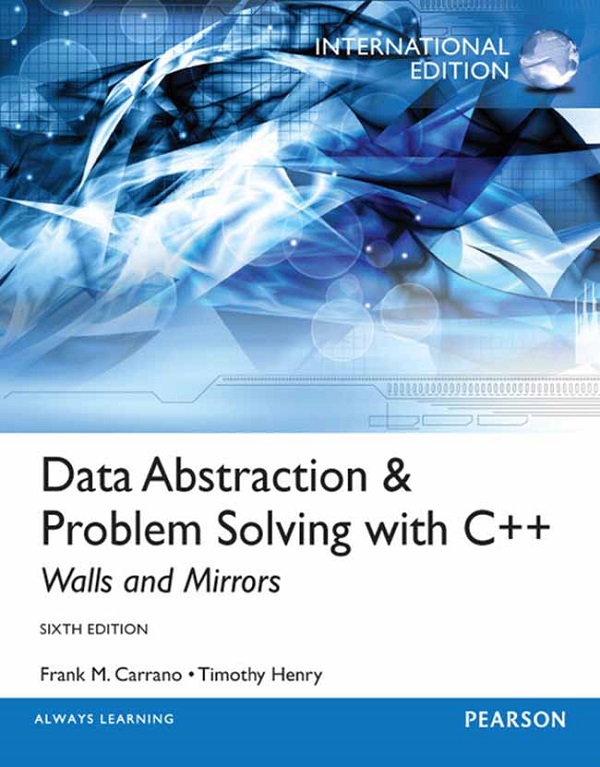
DATAABSTRACTION&PROBLEMSOLVINGWITHC++6/E(IE)
作者:
CARRANO、HENRY
分類:
參考•考試•教科書
/
大專學院教科書
出版社:
PE
出版日期:2019/10/17
ISBN:9780273768418
書籍編號:kk0499629
頁數:840
定價:
1320
元
特別會員價:
95
折
1254
元
書價若有異動,以出版社實際定價為準
訂購後立即為您進貨
訂購後立即為您進貨:目前無庫存量,讀者下訂後,開始進入調書程序,一般天數約為2-10工作日(不含例假日)。
團購數最低為 15 本以上
評價數:
(請將滑鼠移至星星處進行評價)
目前平均評價:
文字連結
複製語法
<a href='http://www.silkbook.com/book_detail.asp?goods_ser=kk0499629'>DATAABSTRACTION&PROBLEMSOLVINGWITHC++6/E(IE)</a>
圖片連結
複製語法
<a href='http://www.silkbook.com/book_detail.asp?goods_ser=kk0499629'><img src='http://www.silkbook.com/mall_image/bk/kk0499629.jpg' ALT='DATAABSTRACTION&PROBLEMSOLVINGWITHC++6/E(IE)' height='120' width='90'></a>
分
享
內容簡介
書籍目錄
同類推薦
DATAABSTRACTION&PROBLEMSOLVINGWITHC++6/E(IE) 內容簡介 This classic, best selling data structures text provides a firm foundation in data abstraction that emphasizes the distinction between specifications and implementation as the basis for an object-oriented approach. Software engineering principles and concepts as well as UML diagrams are used to enhance student understanding. The sixth edition of Data Abstraction and Problem Solving with C++: Walls & Mirrors welcomes Associate Professor Timothy Henry of the University of Rhode Island as a co-author with Frank Carrano. The 6th edition is a significant revision of the previous edition with these goals: - to place greater emphasis on data abstraction as a problem solving tool; - to emphasize C++ as an implementation tool; - to reduce the interdependency of chapters to allow more flexibility for instructors; - to demonstrate safe and secure programming practices, - to add VideoNotes - to include a transition guide from Python to C++ 本書特色 - Provides a strong introduction to, and continuous use of, data abstraction emphasizing the distinction between specification and implementation - Features extensive coverage of object-oriented programming techniques - Focuses on core data structures instead of non-essential C++ language syntax - Illustrates the role of classes and ADTs in the problem-solving process - Includes major applications of ADTs, such as searching a flight map, event-driven simulation, and the eight queens problem - Covers the use of the Standard Template Library (STL) with examples included in most chapters - Provides the best coverage of recursion available - Includes an appendix, "Basic C++ Syntax", for students who are making the transition from another language to C++ - Frank’s Making it Real bloghttp://frank-m-carrano.com/blog/ extends his textbooks and lectures to a lively discussion with instructors and students about teaching and learning computer science. Follow Frank on Twitter: http://twitter.com/Frank_M_Carrano Find him on Facebook: https://www.facebook.com/makingitreal
目錄 Chapter 1 Data Abstraction: The Walls 1.1 Object-Oriented Concepts 1.1.1 Object-Oriented Analysis and Design 1.1.2 Aspects of an Object-Oriented Solution 1.2 Achieving a Better Solution 1.2.1 Cohesion 1.2.2 Coupling 1.3 Specifications 1.3.1 Operation Contracts 1.3.2 Unusual Conditions 1.3.3 Abstraction 1.3.4 Information Hiding 1.3.5 Minimal and Complete Interfaces 1.4 Abstract Data Types 1.4.1 Designing an ADT 1.4.2 ADTs that suggest other ADTs 1.5 The ADT Bag 1.5.1 Identifying Behaviors 1.5.2 Specifying Data and Operations 1.5.3 An Interface Template for the ADT 1.5.4 Using the ADT Bag C++ Interlude 1 C++ Classes C1.1 A Problem to Solve C1.1.1 Private Data Fields C1.1.2 Constructors and Destructor C1.1.3 Methods C1.1.4 Preventing Compiler Errors C1.2 Implementing a Solution C1.3 Templates C1.4 Inheritance C1.4.1 Base Classes and Derived Classes C1.4.2 Overriding Base Class Methods C1.5 Virtual Methods and Abstract Classes C1.5.1 Virtual Methods C1.5.2 Abstract Classes Chapter 2 Recursion: The Mirrors 2.1 Recursive Solutions 2.2 Recursion That Returns a Value 2.2.1 A Recursive Valued Function: The Factorial of n 2.2.2 The Box Trace 2.3 Recursion That Performs an Action 2.3.1 A Recursive void Function: Writing a String Backward 2.4 Recursion with Arrays 2.4.1 Writing an Array’s Entries in Backward Order 2.4.2 The Binary Search 2.4.3 Finding the Largest Value in an Array 2.4.4 Finding the kth Smallest Value of an Array 2.5 Organizing Data 2.5.1The Towers of Hanoi 2.6 More Examples 2.6.1 The Fibonacci Sequence (Multiplying Rabbits) 2.6.2 Organizing a Parade 2.6.3 Choosing k Out of n Things 2.7 Recursion and Efficiency Chapter 3 Array-Based Implementations 3.1 The Approach 3.1.1 Core Methods 3.1.2 Using Fixed-Size Arrays 3.2 An Array-Based Implementation of the ADT Bag 3.2.1 The Header File 3.2.2 Defining the Core Methods 3.2.3 Testing the Core Methods 3.2.4 Implementing More Methods 3.2.5 Methods That Remove Entries 3.2.6 Testing 3.3 Using Recursion in the Implementation C++ Interlude 2 Pointers, Polymorphism, and Memory Allocation C2.1 Memory Allocation for Variables and Early Binding of Methods C2.2 A Problem to Solve C2.3 Pointers and the Program Free Store C2.3.1 Deallocating Memory C2.3.2 Avoiding Memory Leaks C2.3.3 Avoiding Dangling Pointers C2.4 Virtual Methods and Polymorphism C2.5 Dynamic Allocation of Arrays C2.5.1 A Resizable Array-Based Bag Chapter 4 Link-Based Implementations 4.1 Preliminaries 4.1.1 The Class Node 4.2 A Link-Based Implementation of the ADT Bag 4.2.1 The Header File 4.2.2 Defining the Core Methods 4.2.3 Implementing More Methods 4.3 Using Recursion in Link-Based Implementations 4.3.1 Recursive Definitions of Methods in LinkedBag 4.4 Comparing Array-Based and Link-Based Implementations Chapter 5 Recursion as a Problem-Solving Technique 5.1 Defining Languages 5.1.1 The Basics of Grammars 5.1.2 Two Simple Languages 5.3 Algebraic Expressions 5.2.1 Kinds of Algebraic Expressions 5.2.2 Prefix Expressions 5.2.3 Postfix Expressions 5.2.4 Fully Parenthesized Expressions 5.3 Backtracking 5.3.1 Searching for an Airline Route 5.3.2 The Eight Queens Problem 5.4 The Relationship Between Recursion and Mathematical Induction 5.4.1 The Correctness of the Recursive Factorial Function 5.4.2 The Cost of Towers of Hanoi Chapter 6 Stacks 6.1 The Abstract Data Type Stack 6.1.1 Developing an ADT During the Design of a Solution 6.1.2 Specifications for the ADT Stack 6.2 Simple Uses of a Stack 6.2.1 Checking for Balanced Braces 6.2.2 Recognizing Strings in a Language 6.3 Using Stacks with Algebraic Expressions 6.3.1 Evaluating Postfix Expressions 6.3.2 Converting Infix Expressions to Equivalent Postfix Expressions 6.4 Using a Stack to Search a Flight Map 6.5 The Relationship Between Stacks and Recursion C++ Interlude 3 Exceptions C3.1 Background C3.1.1 A Problem to Solve C3.2 Assertions C3.3 Throwing Exceptions C3.4 Handling Exceptions C3.1.1 Multiple catch Blocks C3.1.2 Uncaught Exceptions C3.5 Programmer-Defined Exception Classes Chapter 7 Stack Implementations 7.1 An Array-Based Implementation 7.2 A Linked Implementation 7.3 Comparing Implementations Chapter 8 Lists 8.1 Specifying the Abstract Data Type List 8.2 Using the List Operations 8.3 Specifications of the ADT List Using Exceptions Chapter 9 List Implementations 9.1 An Array-Based Implementation of the ADT List 9.1.1 The Header File 9.1.2 The Implementation File 9.2 A Linked Implementation of the ADT List 9.2.1 The Header File 9.2.2 The Implementation File 9.2.3 Using Recursion To Process a Linked Chain 9.3 Comparing Implementations Chapter 10 Algorithm Efficiency 10.1 What Is a Good Solution? 10.2 Measuring the Efficiency of Algorithms 10.2.1 The Execution Time of Algorithms 10.2.2 Algorithm Growth Rates 10.2.3 Order-of-Magnitude Analysis and Big O Notation 10.2.4 Keeping Your Perspective 10.2.5 The Efficiency of Searching Algorithms Chapter 11 Sorting Algorithms and Their Efficiency 11.1 Basic Sorting Algorithms 11.1.1 Selection Sort 11.1.2 Bubble Sort 11.1.3 Insertion Sort 11.2 Faster Sorting Algorithms 11.2.1 Merge Sort 11.2.2 Quick Sort 11.2.3 Radix Sort 11.3 A Comparison of Sorting Algorithms 11.4 The Standard Template Library: Sorting Algorithms C++ Interlude 4 Class Relationships and Reuse C4.1 Inheritance Revisited C4.1.1 Public, Private, and Protected Sections of a Class C4.1.2 Public, Private, and Protected Inheritance C4.1.3 Is-a and As-a Relationships C4.2 Containment: Has-a Relationships C4.3 Abstract Base Classes Revisited Chapter 12 Sorted Lists and Their Implementations 12.1 Specifying the ADT Sorted List 12.1.1 An Interface Template for the ADT Sorted List 12.1.2 Using the Sorted List Operations 12.2 A Link-Based Implementation 12.2.1 The Header File 12.2.3 The Implementation File 12.2.3 The Efficiency of the Link-Based Implementation 12.3 Implementations That Use the ADT List 12.3.1 Composition 12.3.2 Public Inheritance 12.3.3 Private Inheritance Chapter 13 Queues and Priority Queues 13.1 The ADT Queue 13.2 Simple Applications of a Queue 13.2.1 Reading a String of Characters 13.2.2 Recognizing Palindromes 13.3 The ADT Priority Queue 13.4.1 Tracking Your Assignments 13.4 Application: Simulation 13.5 Position-Oriented and Value-Oriented ADTs Chapter 14 Queue Implementations 14.1 Implementations of the ADT Queue 14.1.1 An Implementation That Uses the ADT List 14.1.2 A Link-Based Implementation 14.1.3 An Array-Based Implementation 14.1.4 Comparing Implementations 14.2 An Implementation of the ADT Priority Queue C++ Interlude 5 Overloaded Operators and Friend Classes Overloading Operators Overloading the Stream Operators << and >> Friend Classes and Data Member Access Chapter 15 Trees 15.1 Terminology 15.1.1 Kinds of Trees 15.1.2 The Height of Trees 15.1.3 Full, Complete, and Balanced Binary Trees 15.1.4 The Maximum and Minimum Heights of a Binary Tree 15.2 The ADT Binary Tree 15.2.1 Binary Tree Operations 15.2.2 An Interface Template for the ADT Binary Tree 15.2.3 Traversals of a Binary Tree 15.3 The ADT Binary Search Tree 15.3.1 Binary Search Tree Operations 15.3.2 An Interface Template for the ADT Binary Tree 15.3.3 Searching a Binary Search Tree 15.3.4 Creating a Binary Search Tree 15.3.5 Traversals of a Binary Search Tree Chapter 16 Tree Implementations 16.1 Implementations of the ADT Binary Tree 16.1.1 A Link-Based Implementation 16.1.2 An Array-Based Implementation 16.1.3 Efficiency of Implementations 16.2 An Implementation of the ADT Binary Search Tree 16.2.1 Algorithms for Insertion, Deletion, and Traversal 16.2.2 A Link-Based Implementation 16.2.3 Efficiency of the Implementation 16.2.4 Saving a Binary Search Tree in a File C++ Interlude 6 Iterators Iterator Introduction A List Iterator and Its Use A BST Tree Iterator and Its Use Chapter 17 Heaps An Array-Based Implementation A Heap as a Priority Queue The Heap Sort Chapter 18 Dictionaries and Their Implementations Dictionaries and Key-Value Pairs Linear (Array and Linked) and Hierarchical (Tree) Implementations Hash Functions Resolving Collisions A Hashing Implementation The Efficiency of Hashing Chapter 19 Balanced Search Trees AVL Trees 2-3 Trees 2-3-4 Trees Red-Black Trees Chapter 20 Graphs 20.1 Terminology 20.2 Graphs as ADTs 20.2.1 Implementing Graphs 20.3 Graph Traversals 20.3.1 Depth-First Search 20.3.2 Breadth-First Search 20.4 Applications of Graphs 20.4.1 Topological Sorting 20.4.2 Spanning Trees 20.4.3 Minimum Spanning Trees 20.4.4 Shortest Paths 20.4.5 Circuits 20.4.6 Some Difficult Problems Chapter 21 Processing Data in External Storage 21.1 A Look at External Storage 21.2 A Sorting Data in an External File 21.3 External Searches 21.3.1 Indexing an External File 21.3.2 External Hashing 21.3.3 B-Trees 21.3.4 Traversals 21.3.5 Multiple Indexing C++ Interlude 7 The Standard Template Library Introduction to Templates and the STL Generalizing the ADT Node and List Appendix A Review of C++ Fundamentals Appendix B Important Themes in Programming (currently Section 1.3) Appendix C The Unified Modeling Language (currently in section 1.1) Appendix D The Software Life Cycle (currently section 1.1) Appendix E Mathematical Induction (currently Appendix D) Appendix F Algorithm Verification (currently in section 1.2) Appendix G Files Appendix H C++ Header Files and Standard Functions (currently Appendix C) Appendix I C++ Standard Template Library (currently Appendix E) Appendix J C++ Documentation Systems (currently Appendix F) Appendix K ASCII Character Codes (currently Appendix B) Appendix L A Comparison of C++ and Java Appendix M A Comparison of C++ and Python?
新編環境毒物學(第二
生活科技(第六版)
Java程式設計入門
現代商用英文──書信
醫療急救(第二版)
空氣汙染防制:理論及
綠色能源科技(第六版
新編毛詩韻讀(第四版
基本護理學總複習─心
中醫護理學概論(第五
Q1:若我已報名付了1000元訂金,接下來我要做什麼? A:感謝您報名,後續相關事情及服務我們會以e-mail和電話跟您聯絡. 您也可以主動來信(andy@book4u.com.tw)詢問。謝謝! Q2:我本身並沒有產品和服務,也沒什麼實務上的經驗,那又能如何賺錢呢?這個課程真的有實際成效嗎? A:我們這個課程共有11項贈品,其中第2項贈品便是資訊產品創造藍圖,它將教您如何用最簡潔而快速的方法創出屬於您自己的資訊產品。一般的課程大多是教您如何捕魚,但多數的成功致富者,其成功的關鍵卻不是仰賴捕魚技術,而是仰賴借力之術,因為唯有借力才能無中生有!才能快速成長!也才能快速致富!本課程3天共有三套樣版,其中一套樣版便是教您打造在沒有任何商品與服務,也沒有任何資源的情況下,就能快速借力致富的樣版!本課程二位講師都是白手起家,對於沒有實務經驗的新手會格外用心,請放心。 Q3:請問贈品中魚池矩陣直效聯盟VVIP是什麼? A:這是一個強大的系統,而我們送的是體驗版,會提供你Email追客系統。國外有一種函授課程,亦即每幾天發一個課程給學員, 就是用EMAIL追客系統來實踐。EMAIL追客系統簡單的說就是今天有一個客戶在你的網站上購買產品或註冊,系統會自動回覆一封確認信,之後你可以自行設計發送內容和發信時間一次一對多發給客戶,而且每封信還會帶入客戶本身的姓名。讓客戶以為是我們專門為客戶所量身訂作的信件。所以Email追客系統可以讓你培養跟客戶的信任感,進而成交。 Q4:請問贈品中資訊產品創造藍圖是什麼? A:這是一位叫林星?老師的課程,課程售價是9800元,現在免費送給你。此課程包含: ● 何謂資訊型產品? ● 資訊型產品的種類大解析!以及如何組織你的資訊型產品賺錢? ● 如何找到你的利基市場? ● 為什麼錯的利基市場,再好的產品與行銷也很難有效! ● 29個國外已經證實能讓你賺到錢的利基市場! ● 如何確保你做出來的產品客戶會很想購買?以及實際可執行的步驟! ● 創造資訊型產品計劃書 ● 15個步驟建立你的資訊型產品事業 ● E-mail精準行銷的10個法則 ● 10個別人沒有告訴你的有效文案撰寫法則 Q5:請問贈品中自動財富系統 6片DVD是什麼? A:此6片DVD定價3200元。內容為《借力淘金!最吸利的鈔級魚池賺錢術》作者之一王紫杰所錄製的DVD,內容為有關網路行銷的知識和技巧,非常豐富且實用,免費送給您。
為了保障您的權益,新絲路網路書店所購買的商品均享有到貨七天的鑑賞期(含例假日)。退回之商品必須於鑑賞期內寄回(以郵戳或收執聯為憑),且商品必須是全新狀態與完整包裝(商品、附件、內外包裝、隨貨文件、贈品等),否則恕不接受退貨。