會員登入
|
加入會員
|
會員專區
|
購物車
|
自資出版
|
電子書城
|
客服中心
文學小說
商管創投
人文藝坊
勵志養生
進修學習
科學工程
家庭親子
玩樂天地
書名
出版社
作者
isbn
編號
英語會話
|
成交的秘密
|
霹靂影音寫真特典
|
微處理機/單晶片組合語言教學範本(附CD)
此作者無相關書籍
文學小說
文學
|
小說
商管創投
財經投資
|
行銷企管
人文藝坊
宗教、哲學
社會、人文、史地
藝術、美學
|
電影戲劇
勵志養生
醫療、保健
料理、生活百科
教育、心理、勵志
進修學習
電腦與網路
|
語言工具
雜誌、期刊
|
軍政、法律
參考、考試、教科用書
科學工程
科學、自然
|
工業、工程
家庭親子
家庭、親子、人際
青少年、童書
玩樂天地
旅遊、地圖
|
休閒娛樂
漫畫、插圖
|
限制級
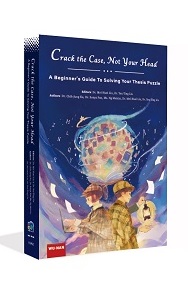
Crack the Case, Not Your Head: A Beginner’s Guide To Solving Your Thesis Puzzle
作者:
Dr. Chih-Jung Ku、Dr. Sonya Fan、Ms. Ng Meixin、Dr. Mei-Huei Liu、Dr. Yeu-Ting Liu
分類:
參考•考試•教科書
/
大專學院教科書
出版社:
五南文化
出版日期:2024/9/25
ISBN:9786263936973
書籍編號:kk0591888
頁數:464
定價:
580
元
一般會員價:
95
折
551
元
特別會員價:
9
折
522
元
書價若有異動,以出版社實際定價為準
訂購後立即為您進貨
訂購後立即為您進貨:目前無庫存量,讀者下訂後,開始進入調書程序,一般天數約為2-10工作日(不含例假日)。
團購數最低為 15 本以上
評價數:
(請將滑鼠移至星星處進行評價)
目前平均評價:
文字連結
複製語法
<a href='http://www.silkbook.com/book_detail.asp?goods_ser=kk0591888'>Crack the Case, Not Your Head: A Beginner’s Guide To Solving Your Thesis Puzzle</a>
圖片連結
複製語法
<a href='http://www.silkbook.com/book_detail.asp?goods_ser=kk0591888'><img src='http://www.silkbook.com/mall_image/bk/kk0591888.jpg' ALT='Crack the Case, Not Your Head: A Beginner’s Guide To Solving Your Thesis Puzzle' height='120' width='90'></a>
分
享
內容簡介
作者介紹
書籍目錄
同類推薦
Crack the Case, Not Your Head: A Beginner’s Guide To Solving Your Thesis Puzzle 內容簡介 這本書是學術英語寫作界的「不藏私寶典」! 當你凝視著論文(或作業)的時候,論文也凝視著你──英語學術論文寫作,是許多人在學習途中的考驗,這本書正是為了這些勇敢的冒險者量身打造! 作者們由自身笑淚交織的經驗出發,像一位隱形的學長姊,與你一起在「論文寫作」的世界中冒險。從揭開學術寫作迷思的面紗,搭配案例、練習題,和你逐步走過選題、文獻回顧、研究方法到結果討論,還包含「 AI 輔助寫作」、「 生涯規劃」等等議題——沒錯,你並不是唯一在凌晨三點還在跟論文對抗的人! 「這本書中很特別的一點是貫穿全書的《唬爾摩斯與譁生》偵探故事。由系列的故事引導讀者進入每一章中作者們要傳達的核心概念,並在生硬的文字段落中插入表格和插圖,以不同的形式來幫助讀者理解書中的內容,使他們能夠快速掌握書中複雜的概念。」——師大校長吳正己 「書中除了運用了偵探故事的元素,激發讀者的好奇心之外,還大玩眾多風趣的時事梗、諧音梗、流行文化梗和迷因梗圖等。特別是擅長將枯燥的概念用貼近年輕人生活的事例來比擬取譬,讓同學在學習嚴肅的學術寫作時也能保持愉快心情。這也反映出作者團隊高超的教學創意,能把複雜的寫作技巧和研究方法轉化為生動易懂的內容,還能令人會心一笑。」——師大翻譯所前所長廖柏森教授 「如果是勇者欣梅爾的話,他一定也會這麼做的。」我們衷心希望,這本書能幫讓你在學術寫作的冒險旅程上少走點彎路,甚至還能找到一點樂趣也說不定哦!(嘿嘿,別說不可能!) In this book, the authors share all their secrets on how to write well in the academic context! Picture this: You open up an academic writing task or assignment and stare at it. You might feel the task staring back at you. And then what? Does this sound familiar (perhaps too familiar)? If it does, you are not alone. Academic writing in English is immensely challenging for many beginning writers. For those of you brave enough to take on the challenge, this book is here to give you a boost! Throughout the book, the authors share heartfelt stories of laughter and joy, sweat and tears. They are like your personal guardian angels – you can’t see them, but they are there as your loyal companions as you embark on your academic writing adventure. First, we begin with some debunking myths on academic writing to help you get started on the right foot, before the various chapters take you through the key components of an academic paper or thesis, such as setting a good topic, conducting a literature review, discussing your research method, and penning your discussion and conclusion to wrap up the manuscript. Every chapter comes with a host of examples and guided exercises to ensure you grasp important academic writing know-how. On top of that, there are also chapters on the intersection of pertinent issues, such as AI and career prospects, with academic writing. Know that you are not the only one being kept awake at 3 am thinking about these issues or struggling with your writing! “One of the most unique features of this book is the story of Detective Surelock and Dr. Whatson, which opens each chapter. The detective story at the start of every chapter introduces its core concept. Furthermore, the writers also include a variety of visual aids and illustrations, especially at the more difficult parts of the text, so that readers might grasp important and complex ideas relatively easily.” – Dr. Cheng-Chih Wu, President, National Taiwan Normal University “Besides incorporating elements of detective stories to make for a more interesting read, the writers also included numerous funny references to current affairs and pop culture, utilized wordplays, and added lots of memes to the text. The writers are especially skilled at using analogies familiar to young readers to explain what could have been dry and boring concepts. In this way, beginner writers would not feel bogged down even as they pick up pointers on writing serious academic papers. Such a writing style reflects the high level of pedagogical creativity wielded by the writing team, for they managed to not only transform complex writing techniques and research methods into interesting and easy-to-understand content but even elicit a laugh in the process!” – Dr. Liao Posen, Former Chair, Graduate Institute of Translation and Interpretation, National Taiwan Normal University To quote a line from the anime and manga Frieren, "The Hero Himmel would’ve done that." You, too, can emulate Himmel’s courage and take on what seems like an impossible challenge. We sincerely hope that this book will make your academic writing adventure less arduous, and even a little more fun! After all, nothing is impossible when you put your mind to it! 書籍推薦人 聯合推薦 Dr. Cheng-Chih Wu President, National Taiwan Normal University Dr. Frank Yung-Hsiang Ying Executive Vice President, National Taiwan Normal University Dr. Wen-June Wang Vice President for Academic Affairs, National Central University Dr. Shu-chen Sherry Ou Vice President for Academic Affairs, National Sun Yat-sen University Dr. Yuh-Fang Chang Vice President for Academic Affairs, National Chung Hsing University Dr. Posen Liao Associate Dean, College of Liberal Arts (2016-2017), National Taiwan Normal University Dr. Daniel Hu Chair, Graduate Institute of Translation and Interpretation, National Taiwan Normal University
作者簡介 Dr. Mei-Huei Liu A distinguished professor and Vice President for Academic Affairs of National Taiwan Normal University, Dr. Liu works in many areas such as citizenship education, phenomenon-based learning, curriculum development, international education, multicultural education, teacher education, and gender issues. Dr. Yeu-Ting Liu A distinguished professor and Associate Vice President for Academic Affairs at National Taiwan Normal University, Dr. Liu’s research areas include the cognitive aspects of computer-assisted language learning, second-language vocabulary processing and acquisition, second-language reading processes, and second-language phonological acquisition. Dr. Chih-Jung Ku A postdoctoral fellow at the Center for Academic Literacy at National Taiwan Normal University, Dr. Ku’s research interests include STEM education, technology and engineering education, teacher education, and teacher professional development. Dr. Sonya Fan A full-time teacher at the Center for Academic Literacy and associate executive at the Resource Center for English as a Medium of Instruction at National Taiwan Normal University, Dr. Fan is active in teacher education, with research interests in international education and bilingual education. Ms. Ng Meixin A Ph.D. candidate at the Graduate Institute of Translation and Interpretation at National Taiwan Normal University, Ms. Ng has honed her sensitivity in both English and Chinese through translation, while her teaching experience has enabled her to identify transferable skills applicable to learners in Taiwan.
本書目次 Foreword 1 What Do You Mean It’s Not True? – Debunking Myths of Thesis Writing Myth 1 Academic Writing Should Always Start From the Beginning Myth 2 I Need to Know Everything About the Topic Before I Can Start Writing Myth 3 Literature Review – The More the Merrier Myth 4 Thesis-Writing Is Meant to Be Lonely Myth 5 Academic Writing Means I Cannot Express Any Personal Insight Recap and Key Takeaways 2 Find Me a Case! – Choosing the Right Topic for Your Thesis 1. Lessons From the Field 2. Encrypted Case Files: Finding the Right Topic 3. Field Training Exercises Recap and Key Takeaways Suggested Answers to Chapter Exercises 3 Who Can Help Me, and How? – Working With Your Advisor 1. Finding the Right Fit 2. We’ve All Been There: Personal Stories From Our Writers 3. Making It Work 4. Exercise: Choosing the Right Advisor 5. Do We Have a Match? Recap and Key Takeaways 4 Am I Cheating? – Ethics in the Age of AI 1. What Is Generative AI And How Does It Work? 2. Strengths of Generative AI 3. Training Your AI Butler 4. Weaknesses 5. The King and His Advisor (Part I): How to Take a Life 6. How Can I Use AI Wisely? 7. The King and His Advisor (Part II): Sit Tight on the Throne 8. Conclusion 9. Field Training Exercises Recap and Key Takeaways Suggested Answers to Chapter Exercises 5 Do I Sound Like I’m Five? – Addressing the Nuances of Academic Writing 1. What’s Academic Writing? 2. Why Write This Way? 3. The Do’s of Writing Academically 4. The Don’ts of Making Your Writing More “Academic” 5. Finding Your Academic Sea Legs: Getting the Hang of Academic Writing 6. The Last Word (For Now, at Least) 7. Field Training Exercises Recap and Key Takeaways Suggested Answers for Chapter Exercises 6 Shall We Begin? – Introduction 1. First Up: What Kind of Study Am I Conducting? 2. Illustrated Introduction Elements: Where Is My Other Sock? 3. Field Training Exercises Recap and Key Takeaways 7 Where’s That Missing Puzzle Piece? – Literature Review 1. Cooking up a Storm, or Your Lit Review 2. What Is Relevant? 3. The Don’ts of Literature Reviews 4. The Do’s of Literature Reviews 5. Field Training Exercises Recap and Key Takeaways 8 What Have I Done? – Method 1. Why Give away My Secrets? 2. What Information to Include 3. The Meow-thod, Illustrated 4. Dos: Consider This Method to Talk About Your Method! 5. Don’ts: Don’t Be Unmethodological (Duh!) 6. Field Training Exercises Recap and Key Takeaways 9 What Have I Found? – Results 1. Results vs Findings 2. Look What I Found! Organizing Your Research Results Do’s and Don’ts of the Results Section 3. Do These to Get Good Results! 4. Don’t Fall into These Traps! 5. Field Training Exercises Recap and Key Takeaways 10 What Have We Learned? – Discussion & Conclusion 1. The Why: Why Do We Have to Discuss the Findings? 2. The What: Essential Elements of the Discussion & Conclusion 3. Do Keep These in Mind for a Strong Wrap-up 4. Don’t Neglect These Considerations 5. Field Training Exercises Recap and Key Takeaways 11 The Last Stretch – Wrapping up the Study 1. Academic Debugging: Proofreading/Editing 2. A Rose by Any Other Name...: Setting a Good Title 3. Writing an Abstract 4. Setting Keywords, or Academic Hashtags 5. What’s Next? 6. All Good Things Come to an End 7. Field Training Exercises Recap and Key Takeaways
電工法規(第五版)
基礎急救
長期照顧(第九版)
來上邏輯課囉!(第四
飲料實務總複習(第三
分析化學實驗(第五版
統計學(第五版)
視光藥理學(第五版)
財務管理理論與應用(
新編環境毒物學(第二
Q1:若我已報名付了1000元訂金,接下來我要做什麼? A:感謝您報名,後續相關事情及服務我們會以e-mail和電話跟您聯絡. 您也可以主動來信(andy@book4u.com.tw)詢問。謝謝! Q2:我本身並沒有產品和服務,也沒什麼實務上的經驗,那又能如何賺錢呢?這個課程真的有實際成效嗎? A:我們這個課程共有11項贈品,其中第2項贈品便是資訊產品創造藍圖,它將教您如何用最簡潔而快速的方法創出屬於您自己的資訊產品。一般的課程大多是教您如何捕魚,但多數的成功致富者,其成功的關鍵卻不是仰賴捕魚技術,而是仰賴借力之術,因為唯有借力才能無中生有!才能快速成長!也才能快速致富!本課程3天共有三套樣版,其中一套樣版便是教您打造在沒有任何商品與服務,也沒有任何資源的情況下,就能快速借力致富的樣版!本課程二位講師都是白手起家,對於沒有實務經驗的新手會格外用心,請放心。 Q3:請問贈品中魚池矩陣直效聯盟VVIP是什麼? A:這是一個強大的系統,而我們送的是體驗版,會提供你Email追客系統。國外有一種函授課程,亦即每幾天發一個課程給學員, 就是用EMAIL追客系統來實踐。EMAIL追客系統簡單的說就是今天有一個客戶在你的網站上購買產品或註冊,系統會自動回覆一封確認信,之後你可以自行設計發送內容和發信時間一次一對多發給客戶,而且每封信還會帶入客戶本身的姓名。讓客戶以為是我們專門為客戶所量身訂作的信件。所以Email追客系統可以讓你培養跟客戶的信任感,進而成交。 Q4:請問贈品中資訊產品創造藍圖是什麼? A:這是一位叫林星?老師的課程,課程售價是9800元,現在免費送給你。此課程包含: ● 何謂資訊型產品? ● 資訊型產品的種類大解析!以及如何組織你的資訊型產品賺錢? ● 如何找到你的利基市場? ● 為什麼錯的利基市場,再好的產品與行銷也很難有效! ● 29個國外已經證實能讓你賺到錢的利基市場! ● 如何確保你做出來的產品客戶會很想購買?以及實際可執行的步驟! ● 創造資訊型產品計劃書 ● 15個步驟建立你的資訊型產品事業 ● E-mail精準行銷的10個法則 ● 10個別人沒有告訴你的有效文案撰寫法則 Q5:請問贈品中自動財富系統 6片DVD是什麼? A:此6片DVD定價3200元。內容為《借力淘金!最吸利的鈔級魚池賺錢術》作者之一王紫杰所錄製的DVD,內容為有關網路行銷的知識和技巧,非常豐富且實用,免費送給您。
為了保障您的權益,新絲路網路書店所購買的商品均享有到貨七天的鑑賞期(含例假日)。退回之商品必須於鑑賞期內寄回(以郵戳或收執聯為憑),且商品必須是全新狀態與完整包裝(商品、附件、內外包裝、隨貨文件、贈品等),否則恕不接受退貨。